
A reader emailed me a few months ago. She’d spent two weeks on Brilliant Earth’s website, fallen hard for their ethics story, and was about to spend $8,700 on a 1.3-carat engagement ring. She wanted to know if it was worth it before she clicked buy.
I asked her to send me the GIA report number.
The same stone — same carat, same cut, same GIA grade — was sitting on Blue Nile for $6,150.
That $2,550 gap is the reason I wrote this review. Not because Brilliant Earth is a bad company — they are not. But there are things buyers deserve to know before spending thousands on the strength of a brand’s story.
4.0 / 5
2.5 / 5
4.5 / 5
3.5 / 5
4.0 / 5
4.5 / 5
4.0 / 5
3.5 / 5
Brilliant Earth sells genuinely good diamonds with a strong ethics-focused brand. The stones are well-certified, the website is beautifully designed, and the customization builder is one of the better ones online. The problem is price — you consistently pay 20 to 40 percent more here than you would for the same graded stone on Blue Nile or James Allen. If that premium buys you peace of mind about sourcing, it may be worth it. If you just want the best diamond your budget can get, you will almost certainly do better elsewhere.
- GIA-certified natural diamonds across all price points
- Genuine B Corp certification — real accountability
- Beautiful ring customization builder
- 30-day no-hassle returns
- Physical showrooms in 30+ cities if you want to see before buying
- Free resizing within the first year
- Prices 20–40% higher than Blue Nile for equivalent natural diamonds
- Lab-grown selection is smaller and still overpriced vs competitors
- Ethical sourcing claims are harder to verify than the marketing suggests
- Customer service response times are inconsistent
- No GIA certification on most lab-grown diamonds
The Quick Decision Snapshot
| Your Situation | What to Do |
|---|---|
| Ethics is your top priority and you accept a price premium for it | Brilliant Earth is a solid choice — the B Corp certification is real |
| You want the best natural diamond your budget can buy | Blue Nile — 200,000+ GIA stones, consistently lower prices |
| You want a lab-grown diamond with verified quality | VRAI — vertically integrated, better lab-grown value |
| You want to see the diamond in person before buying | Brilliant Earth’s showrooms are genuinely useful |
| You want to compare as many options as possible | Blue Nile has the widest selection online by a significant margin |
What Is Brilliant Earth?
Brilliant Earth was founded in 2005 by Beth Gerstein and Eric Grossberg, two Stanford MBA students who wanted to build a diamond company that took sourcing seriously. The idea was simple: the existing Kimberley Process — the international certification scheme meant to keep conflict diamonds out of the market — had too many gaps, and they thought they could do better.
They created what they call the “Beyond Conflict Free” standard. Rather than just certifying that a diamond is not from a conflict zone, they claim to trace diamonds to specific mines, work only with suppliers who meet additional labor and environmental requirements, and donate a portion of profits to communities affected by diamond mining.
The company went public in 2021 under the ticker BRLT and now operates showrooms in over 30 cities across the United States and Canada. They sell both natural and lab-grown diamonds, and they have expanded into colored gemstones and recycled metal jewelry.
On paper, that story is compelling. And honestly, a lot of it is real — more on that in a moment. But the brand has grown faster than the substance behind some of its claims, and buyers paying a significant premium deserve to understand exactly what that premium is buying them.
What a contact in the trade told me
I have a contact who works in wholesale diamond trading and does business with several major online retailers. When I asked about Brilliant Earth, his first comment was: “Good company, genuinely tries. But most buyers are paying for the story as much as the stone.” He said their actual diamond quality is solid — the problem is that a G/VS2 from Brilliant Earth and a G/VS2 from Blue Nile are effectively the same diamond once it leaves the mine, and the GIA certificate treats them identically. The stone does not know where it was purchased.
The Ethics Story — And Where It Gets Complicated
This is the section most reviews skip. I am not going to skip it, because it is the main reason buyers choose Brilliant Earth and pay their price premium.
The honest answer is this: Brilliant Earth’s ethics commitment is more real than most jewelry companies, and less complete than their marketing implies.
The B Corp certification is legitimate. That is a third-party verification process, not a self-awarded badge. To maintain it, they have to meet documented standards for labor practices, environmental impact, and governance. That certification has real weight.
The “Beyond Conflict Free” standard is more complicated. Brilliant Earth says they can trace their diamonds to specific mines, which would be impressive if verifiable. The challenge is that the global diamond supply chain runs through a small number of cutting and polishing centers — mostly in India, Belgium, and Israel — where stones from different origins are routinely mixed. The ability to maintain genuine stone-level traceability from mine to consumer is something that even the world’s most sophisticated supply chain systems struggle with.
Some industry watchdogs, including journalists who have investigated the claim, have found that the documentation Brilliant Earth provides is not always granular enough to verify mine-of-origin as specifically as advertised. The company disputes this. I have no reason to call them dishonest, but I do think buyers should understand that “traceable” in the diamond industry does not mean the same thing it might mean to a consumer used to, say, a coffee brand that can show you the specific farm their beans came from.
What I can say more confidently: they work with recycled metals, they use more rigorous supplier screening than most retailers, and they have a genuine record of charitable giving to mining communities. That is meaningful. Whether it justifies a $2,000–$3,000 premium over a Blue Nile ring is a personal decision, not an objective one.
Want the same GIA quality without the brand premium?
Blue Nile has 200,000+ GIA-certified natural diamonds and consistently comes in 20–40% cheaper than Brilliant Earth on equivalent stones. Same certification. Significantly lower price.
Free shipping on all orders. 30-day returns. 360-degree HD video on every stone so you can inspect before buying.
Diamond Quality: How Good Are the Stones?
This part is genuinely strong. Brilliant Earth’s natural diamonds are GIA-certified across the board, which is the gold standard in the industry. GIA grading is independent, rigorous, and widely recognized. When a stone has a GIA certificate, you know the grade is real and verifiable against a database.
The stones themselves — cut quality, light performance, clarity — are not meaningfully different from what you would find at Blue Nile or James Allen. They are sourced from the same global supply chain, cut in the same major cutting centers, and graded by the same laboratory. A GIA G/VS2 from Brilliant Earth is, in practice, the same as a GIA G/VS2 from anywhere else.
Where Brilliant Earth stands out is the presentation. Their photography and 360-degree videos are excellent. The website makes it easy to examine a stone from multiple angles before buying, which matters more than most buyers realize. A diamond with identical paper grades can look noticeably different in real life depending on its exact proportions and how light moves through it — Brilliant Earth’s visual tools help you spot those differences before you commit.
One thing worth noting: their inventory is significantly smaller than Blue Nile’s. At any given time, Blue Nile has over 200,000 diamonds listed. Brilliant Earth typically carries a fraction of that. For most buyers this will not matter — there are still hundreds of options in most search queries — but if you have very specific requirements, you may find Blue Nile’s depth more useful.
The proportion detail most buyers miss
GIA grades cut quality on a five-point scale, but “Excellent” is not a single thing — it covers a range of proportions. Two Excellent-cut diamonds can perform very differently depending on their table percentage, depth percentage, and crown angle. My recommendation: when shopping on any site, filter to Excellent cut and then look for table 53–58% and depth 59–62% on round brilliants. Both Brilliant Earth and Blue Nile show this data — use it.
Lab-Grown Diamonds at Brilliant Earth
This is where the value story gets harder to defend.
Brilliant Earth has leaned heavily into lab-grown diamonds over the past few years, and their marketing around them is strong. But when you compare prices against dedicated lab-grown retailers, the gap is notable.
Lab-grown diamond prices have dropped significantly over the past three years — as much as 60–70% in some grades. Most retailers have passed those savings to buyers. Brilliant Earth has been slower to adjust, and their lab-grown prices still carry a brand premium that does not always make sense when you compare equivalent stones.
Their lab-grown diamonds are certified by IGI, GCAL, or SCS-007 depending on the stone. IGI is widely accepted and straightforward. SCS-007 is less commonly known but focuses on sustainability verification. GCAL (Gem Certification and Assurance Lab) is respected but not as universally recognized as GIA or IGI. If certification familiarity matters to you, check which lab certified the specific stone before buying.
For buyers whose primary interest is a lab-grown diamond with strong traceability and competitive pricing, VRAI is worth looking at seriously. VRAI grows their own diamonds in their own facility — genuine vertical integration — which means the traceability is simpler and more verifiable. Their lab-grown engagement rings are priced competitively, and the quality control is tight because they control the entire process.
Considering a lab-grown diamond?
VRAI grows their own diamonds in their own facility — the only retailer where the chain from creation to your ring is genuinely traceable. And their prices are often better than Brilliant Earth for the same lab-grown grade.
Free shipping and returns. All stones grown in their own zero-emission foundry.
Products and Pricing — What Things Actually Cost
Let me give you real numbers because vague pricing descriptions are not useful.
Engagement rings (natural diamond, 1 carat round, G color, VS2 clarity, Excellent cut, 14k gold solitaire):
Brilliant Earth: $6,800 — $9,200 depending on the specific stone and setting
Blue Nile: $4,800 — $7,100 for equivalent grade and setting
That gap is consistent. I have run this comparison across dozens of stones and it holds.
Lab-grown engagement rings (1 carat, F color, VS1 clarity, Excellent cut, 14k gold solitaire):
Brilliant Earth: $1,900 — $3,200
VRAI: $1,400 — $2,600
James Allen: $800 — $1,800
The lab-grown price range is wide because it depends heavily on the specific stone and certification.
Diamond stud earrings (natural, 1 ctw, G/VS2, 14k white gold):
Brilliant Earth: $2,200 — $3,400
Blue Nile: $1,600 — $2,500
Diamond necklaces (natural, 0.5 ct pendant, G/VS2):
Brilliant Earth: $900 — $1,600
Blue Nile: $650 — $1,200
The pattern is consistent across categories: Brilliant Earth prices run roughly 25–35% higher than Blue Nile on comparable pieces. For some buyers, that premium is acceptable given the brand’s ethics positioning and showroom access. For buyers primarily focused on getting the best diamond for their budget, that gap is hard to justify when the stones are graded by the same laboratory.
How to check if you are overpaying
If you are looking at a specific Brilliant Earth stone, take the GIA report number, go to Blue Nile, and run a search with the same parameters — same carat weight, same grade ranges, same cut grade. Then compare total prices including the setting. In my experience doing this for readers, Blue Nile comes in cheaper the vast majority of the time. That does not automatically mean you should choose Blue Nile — it means you should go in knowing the gap and deciding consciously.
The Showroom Experience
One thing Brilliant Earth does that Blue Nile and VRAI do not: physical showrooms. They have over 30 locations in the United States, covering most major metro areas, and the showroom experience is genuinely good based on both reader feedback and what I have heard from contacts who have visited.
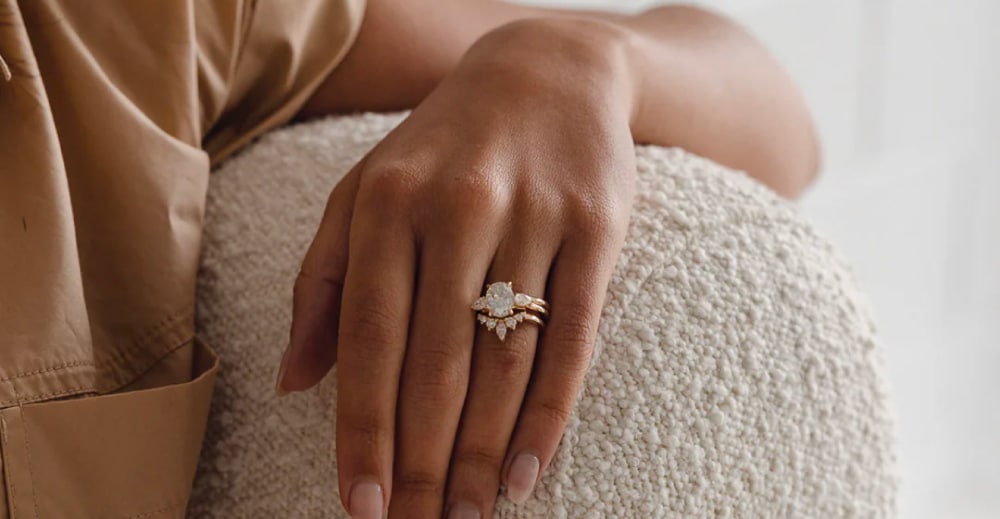
The showrooms are not full inventory locations — you cannot walk in and pick from shelves. Instead, you browse online, shortlist stones, then make an appointment to see them in person before committing. For buyers who are nervous about spending thousands on something they have only seen on a screen, this is a real advantage. The ability to see how a stone looks on an actual hand, under real lighting, changes the decision for a lot of people.
If you are someone who genuinely needs to see a diamond before buying it, Brilliant Earth’s showroom network is one of the best reasons to consider them over pure online retailers. That is an honest point in their favor.
Five Things Brilliant Earth Does Really Well
1. The B Corp certification is genuine.
B Corp certification requires passing a third-party assessment that covers environmental performance, employee treatment, community impact, and corporate governance. It is not easy to get and it is not a self-awarded label. Brilliant Earth holds it and renews it, which tells you something real about how they run the business.
2. Their website is among the best in the industry.
The design, the photography, the 360-degree stone viewer, the ring builder — all of it is well executed. Shopping on Brilliant Earth is genuinely pleasant in a way that not every jewelry site manages. That matters when you are making a $5,000+ decision and trying to feel confident about what you are buying.
3. The ring customization builder is excellent.
You can take almost any loose diamond and pair it with a wide range of settings in multiple metals. The builder shows you realistic renders so you can see the final piece before ordering. It is one of the more flexible and well-designed customization tools online.
4. The 30-day return policy is straightforward.
Some retailers bury their return policy in conditions. Brilliant Earth’s is clear: 30 days, full refund for most items. Resizing within the first year is free. For a purchase this size, a clean return policy is not a small thing.
5. Recycled metal is a real commitment.
All of their gold and platinum settings are made from recycled metals. This one is simple to verify and genuinely reduces the environmental footprint of the ring. If that matters to you, it is something you can feel confident about — unlike some of the more complex sourcing claims, recycled metal is a straightforward standard.
Four Red Flags Worth Knowing
1. The price premium is significant and consistent.
I have compared hundreds of stones across sites and the gap does not go away. If your budget is $6,000, you can get a materially better diamond on Blue Nile than on Brilliant Earth at that budget. That is not a small consideration when you are trying to maximize what your money buys.
2. The traceability claims are hard to verify independently.
Brilliant Earth says they can trace natural diamonds to specific mines. Independent journalists who have investigated this claim have found the documentation trail less complete than the marketing implies. I am not saying they are dishonest — I think they genuinely try harder than most. But “traceable” in the diamond industry is not as clean as it sounds, and buyers should know that before paying a premium for it.
3. Customer service can be inconsistent.
Trustpilot shows a solid 4.2 average, but the negative reviews — there are enough of them — cluster around the same issues: slow email response, difficulty getting through on the phone when there is a problem, and disputes over stone quality that required multiple back-and-forths to resolve. For a company at this price point, the service should be seamless. Based on what I have read from real customers, it is not always.
4. Lab-grown pricing does not reflect the market.
Lab-grown diamond prices have fallen sharply. A 1-carat lab-grown stone that cost $3,000 two years ago might be $900 from the right source today. Brilliant Earth has adjusted their prices, but not as aggressively as some competitors. If you are buying lab-grown specifically to get value, run the comparison before assuming Brilliant Earth is your best option.
Brilliant Earth vs Blue Nile vs James Allen vs VRAI
| Category | Brilliant Earth | Blue Nile | James Allen | VRAI |
|---|---|---|---|---|
| Natural diamond selection | Good (tens of thousands) | Best (200,000+) | Very good (100,000+) | Not available |
| Lab-grown selection | Good | Good | Very good | Excellent (own production) |
| Natural diamond pricing | High premium | Best value | Competitive | N/A |
| Lab-grown pricing | Above market | Competitive | Competitive | Competitive |
| Diamond certification | GIA (natural), IGI/GCAL (lab) | GIA (natural), IGI (lab) | GIA (natural), IGI (lab) | In-house + IGI (lab-grown only) |
| Ethics/sustainability | Best — B Corp certified | Standard industry | Standard industry | Strong — zero-emission production |
| Physical showrooms | Yes — 30+ locations | No | No | No |
| Stone visualization | Excellent — 360 video | Good — 360 video | Best — True360 HD | Good |
| Return policy | 30 days | 30 days | 30 days | 30 days |
| Best for | Ethics-focused buyers | Best value, widest choice | Customization, visualization | Lab-grown, traceability |
How I would split it based on buyer type
If ethics and sustainability are genuinely your top priority and you are comfortable paying more for that, Brilliant Earth is a good company to buy from. If your priority is the best natural diamond your budget can get, use Blue Nile — the selection is larger and the prices are consistently lower. If you specifically want lab-grown and care about verifiable sourcing, VRAI’s model of growing their own diamonds in a documented facility is actually more traceable than Brilliant Earth’s approach to lab-grown, and often cheaper too.
What Real Customers Are Saying
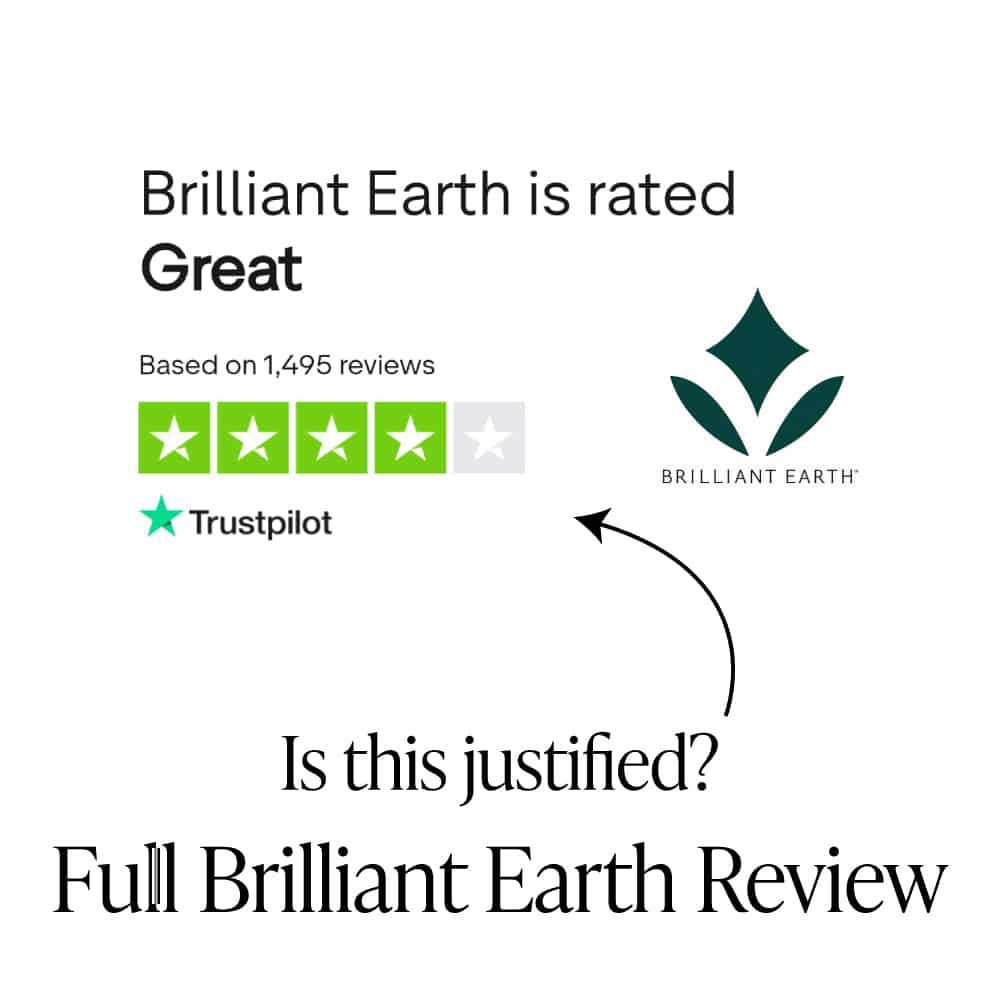
Brilliant Earth holds a 4.2 out of 5 on Trustpilot from over 3,000 reviews — a solid score for a jewelry retailer. The majority of buyers are happy. The positive reviews almost always mention the same things: the ring was beautiful, the stone looked exactly as described, and the unboxing experience felt special.
The negative reviews — which run around 15–20% of the total — cluster around a smaller set of problems. The most common complaint is customer service responsiveness. Multiple reviewers describe having a question or concern after ordering and struggling to get a timely response by email, then waiting too long on hold when they called. For a purchase in the thousands of dollars, that experience is frustrating.
A smaller number of reviews mention stone appearance — buyers who felt the diamond looked less bright or slightly more yellow in person than in the website photos. This is a risk with any online diamond purchase, but a few reviewers specifically said they felt the photos were more flattering than the reality. This is worth keeping in mind: always request a return window confirmation before buying, and inspect the stone immediately when it arrives.
The return process itself gets mostly positive reviews — buyers who did need to return generally found it straightforward and received refunds without excessive friction. That is genuinely reassuring at this price point.
One pattern I noticed: buyers who used the showroom appointment service before committing were significantly more satisfied overall. If you are near a Brilliant Earth showroom, using it before ordering something expensive is probably the best way to shop with them.
Run the comparison before you decide
Before committing to any ring, it takes five minutes to search Blue Nile for the same stone grade and see the price difference. Many readers have found identical GIA grades for thousands less — and the stone quality is the same.
200,000+ GIA-certified diamonds. Filter by cut, color, clarity, and carat. 30-day returns on everything.
Final Verdict: Is Brilliant Earth Worth It?
Brilliant Earth is a well-run company selling genuinely good diamonds. The B Corp certification is real, the stone quality is solid, the ring builder is excellent, and the showroom network is a genuine competitive advantage for buyers who need to see before they buy. None of that is marketing fluff.
The honest complication is the price. You are paying a substantial premium — typically 25–35% over what you would pay for the same GIA-graded stone on Blue Nile. Some of that premium goes toward a real business model that tries to operate more ethically than the industry average. Some of it is brand premium that does not translate into a better diamond.
Whether that premium is worth it depends entirely on what you are optimizing for. If you want to spend your money with a company you can feel good about, knowing the full picture, Brilliant Earth is a defensible choice. If you want to maximize the diamond you can afford on a fixed budget, the math points clearly toward Blue Nile or James Allen.
For lab-grown specifically, I would compare VRAI directly before buying from Brilliant Earth. VRAI’s traceability is genuinely stronger on lab-grown stones, and their pricing tends to be more competitive. Their selection is smaller, but if you know the size and shape you want, it is worth a look.
My bottom line: Brilliant Earth earns its reputation, but it is a reputation you pay for. Know what you are buying — and run the comparison — before you commit.
Frequently Asked Questions
Is Brilliant Earth actually ethical?
More than most, but not as completely as their marketing suggests. The B Corp certification is genuinely earned — that is a third-party standard with real teeth. Their recycled metal commitment is straightforward and verifiable.
Where it gets more complicated is the “Beyond Conflict Free” diamond traceability claim. The idea is that they can trace stones to specific mines rather than just certifying they are not from conflict zones. Some independent investigators have found the documentation trail less thorough than advertised. I do not think Brilliant Earth is being dishonest — I think they are doing more than most retailers and marketing it as completely as they can. But buyers should know that diamond supply chain traceability is difficult at the stone level for the whole industry, not just for Brilliant Earth.
Is Brilliant Earth more expensive than Blue Nile?
Yes, consistently. In comparisons I have run across many searches, Brilliant Earth runs 20 to 40 percent higher than Blue Nile for equivalent GIA-graded natural diamonds. On a $6,000 stone, that gap can represent $1,500 to $2,400 in additional spend for the same graded quality.
The gap on lab-grown is less predictable but still present in many cases. If price is a primary concern, run the same search on both sites before deciding.
Are Brilliant Earth lab-grown diamonds GIA certified?
Not typically. Their lab-grown diamonds are certified by IGI, GCAL, or SCS-007 depending on the stone. GIA does certify lab-grown diamonds, but Brilliant Earth does not rely on GIA for that category.
IGI is widely respected and most jewelers and buyers recognize it. GCAL is solid but less universally known. SCS-007 is more of a sustainability certification than a diamond grading standard. Check which lab certified the specific stone you are looking at before buying.
How does the Brilliant Earth return policy work?
Most items can be returned within 30 days of delivery for a full refund. Engraved items and some special orders are excluded, so check the product page before ordering if that matters for your purchase. The return process itself gets mostly positive reviews from actual customers — the logistics are not where the complaints usually land.
They also offer free ring resizing within the first year, which is a useful policy given that ring sizes can be tricky to get exactly right, especially when buying as a gift.
How does Brilliant Earth compare to VRAI for lab-grown diamonds?
For lab-grown specifically, VRAI has a meaningful structural advantage: they grow their own diamonds in their own facility. That means the chain from diamond creation to finished ring is genuinely short and genuinely traceable — you know exactly where the stone came from because it never left their own supply chain. Brilliant Earth’s lab-grown sourcing is more conventional, with stones coming from third-party producers.
On pricing, VRAI tends to be competitive with or cheaper than Brilliant Earth for equivalent lab-grown grades. Their selection is smaller — they work with fewer shapes and sizes than a large retailer — but for buyers who know what they want, that often does not matter. If traceability and lab-grown quality are your priorities, VRAI is worth comparing before committing to Brilliant Earth.
Can you negotiate price with Brilliant Earth?
They do not openly advertise a price match policy, but they do have one in limited form. If you find the identical stone — same GIA report number — listed lower elsewhere, it is worth contacting them. Some readers have had success, others have not. It is not a guaranteed option the way it is at some other retailers.
What you can do more reliably: look for their seasonal promotions. Brilliant Earth runs sales around major holidays — Black Friday, Valentine’s Day, Mother’s Day — where they offer discounts on settings, which can reduce the total cost even if the stone price stays fixed.
Are Brilliant Earth diamonds real?
Yes. Their natural diamonds are real, mined diamonds certified by GIA. Their lab-grown diamonds are chemically and physically identical to natural diamonds — the only difference is origin, not composition. Both are real diamonds by every scientific standard. The Federal Trade Commission clarified this in 2018 and it is not a contested point in the industry.
If someone tells you lab-grown diamonds are “fake,” they are either confused or trying to sell you a natural stone at a higher margin. A lab-grown diamond and a natural diamond are the same thing — one just took millions of years in the earth, the other took a few weeks in a controlled environment.
Is Brilliant Earth worth it over Blue Nile?
It depends on what you are trying to get from the purchase. If supporting a company with documented ethical commitments matters to you — and you are willing to pay more for that — then Brilliant Earth can be worth the premium. The B Corp certification is real, the showroom network is a genuine advantage, and the overall experience is well designed.
If your goal is the best diamond for your budget, the math consistently favors Blue Nile. The stones are graded by the same GIA laboratory, the quality is the same, and you will typically spend 25–35% less for an equivalent stone. That gap on a $7,000 ring is real money. Blue Nile also has a much larger selection, which increases your chances of finding exactly the right stone at the right price.